Identification
Know the fish before you cast
Reliable ID cues, habitat notes and handling guidance, so a keep-or-release decision is never a guess in the dark.
Open the guides →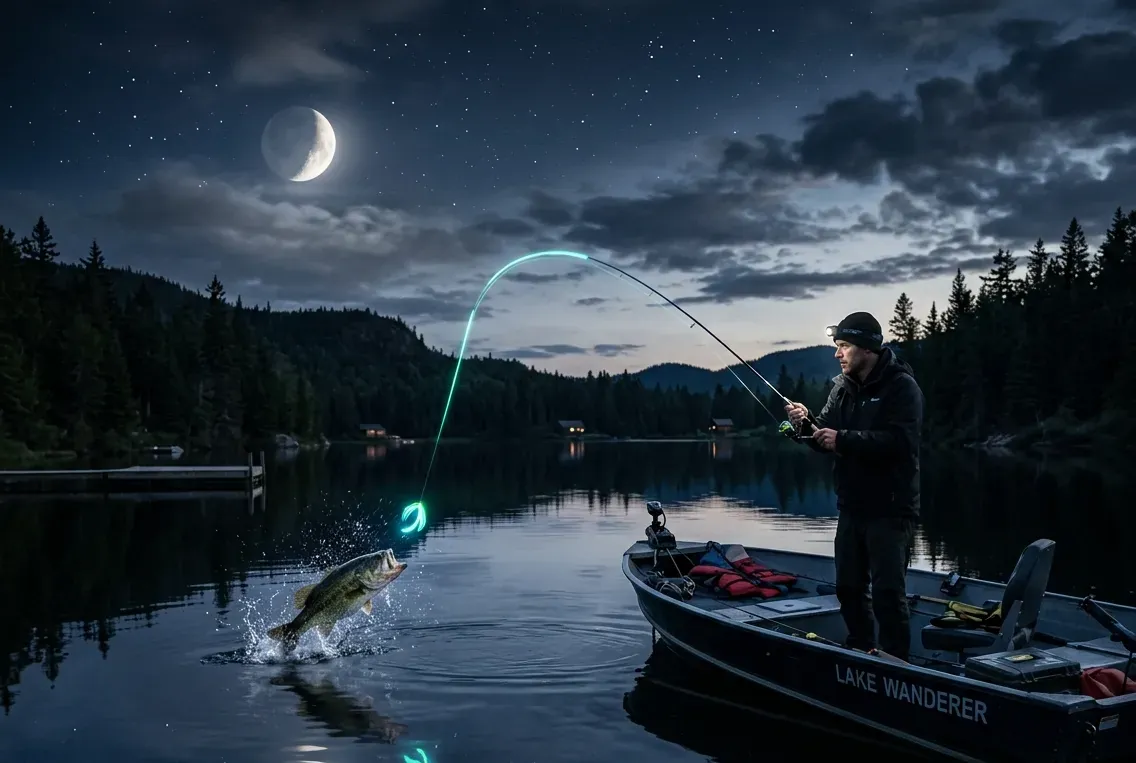
Field notes since 2021
Independent guidance for anglers who fish bass at night — species you can identify by feel, technique that survives a bad forecast, and a checklist that gets you home.
Tonight on the water
Worked out in your browser from the lunar cycle and your device's date — no account, no location, no connection needed once the page has loaded.
—
Calculating…
Moon phase is worked out for your device's date and timezone.
Illumination tells you how much light to expect — not how the fish will behave. Check moonrise and moonset times for your own location before you plan the session around them.
Start here
Pick the question you need answered before the light drops. Each one leads to guidance written by people who fish these hours.
Identification
Reliable ID cues, habitat notes and handling guidance, so a keep-or-release decision is never a guess in the dark.
Open the guides →Technique
Visibility, wind, access and a methodical search pattern — instead of a formula that only works on somebody else's lake.
Read the notes →Preparation
A working pre-trip checklist that saves what you've packed on this device, so the second trip is faster than the first.
Open the checklist →Reading
Knowledge that pays off once the light drops. Read these while you can still see the page.
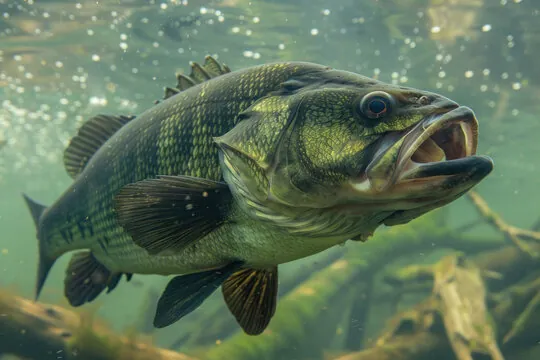
A conditions-first way to think about cover, prey and low-light movement — without turning a tendency into a promise. What changes at dusk, what doesn't, and which of the two your evening actually depends on.
Read the guide →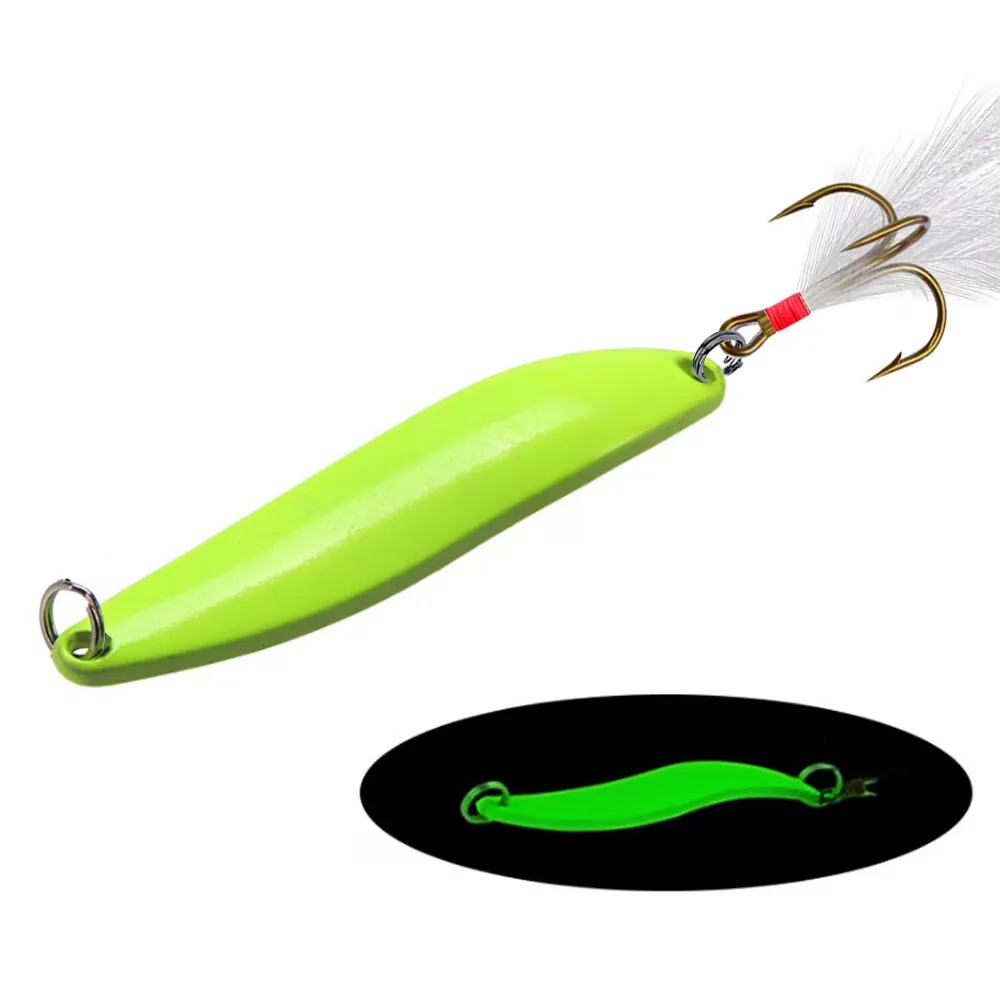
Pick by depth, cover and the feedback coming back up the line — not by a magic-colour checklist.
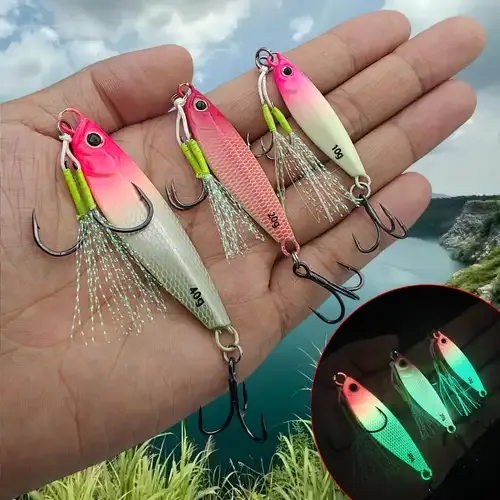
A compact system for light, flotation, weather, organisation and phone power. Everything else stays home.
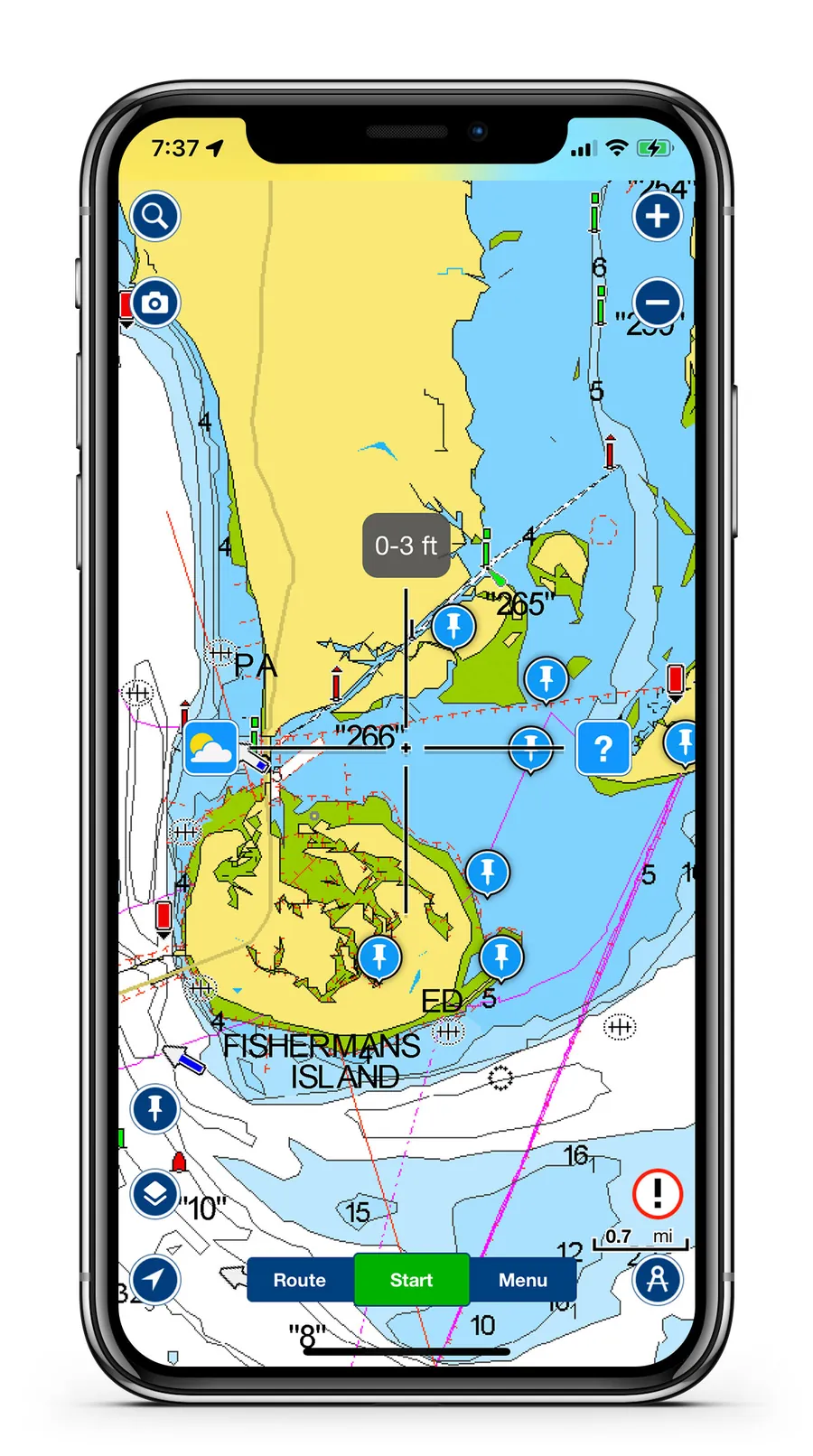
Dim screens, offline prep and a paper backup make a phone useful instead of distracting.
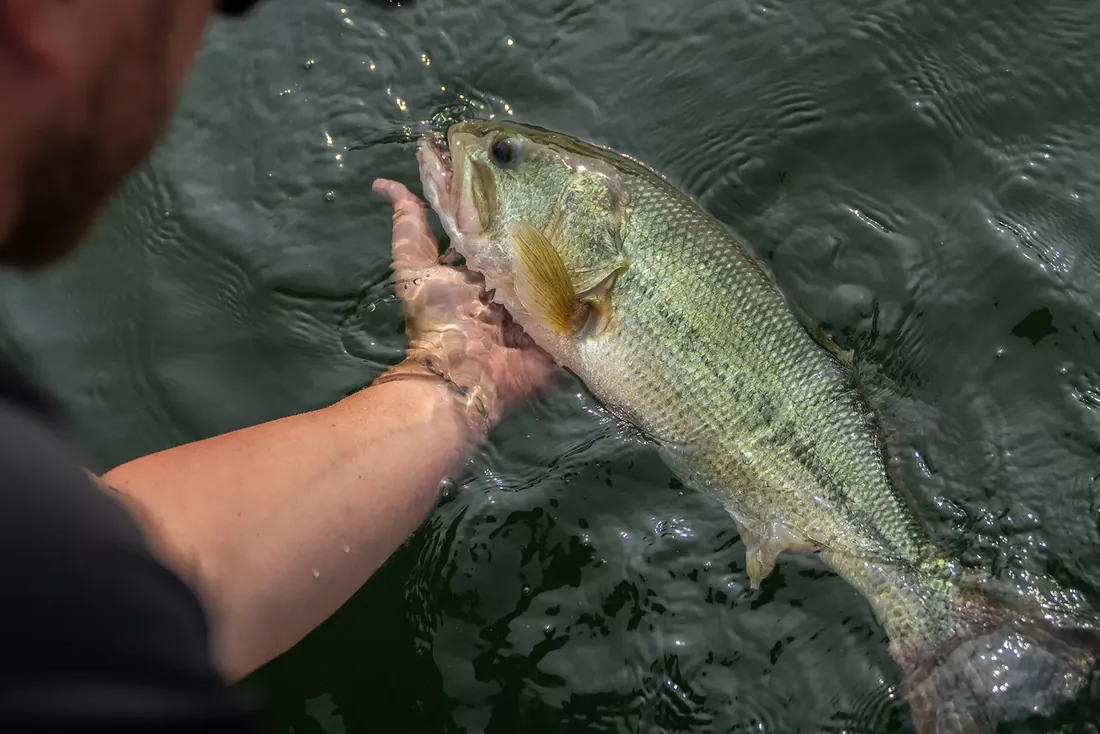
Plan the photo before the fish leaves the water, support it horizontally, keep air exposure short.
Forecasts, barometric trends and official water data are a guide. Thunder is not negotiable.
It takes 20 minutes to adapt and one white beam to lose it. Run red, run dim, run task-specific.
Field identification
Four are black bass; striped and white bass belong to the temperate-bass family. Identification cues are general — regulations are always specific to your water.
Black bass
Micropterus salmoides
Weedy, warmer lakes and slow rivers. Holds tight to cover and works low-light edges hard.
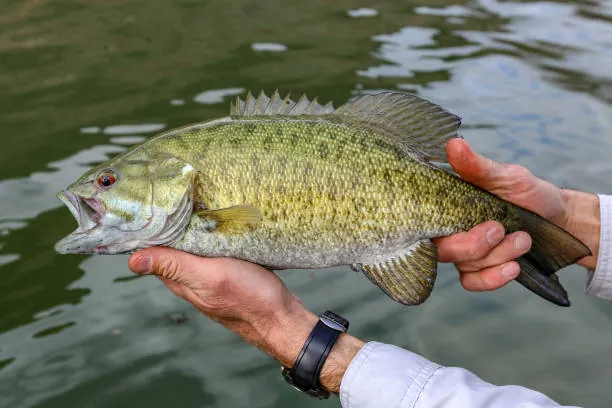 Black bass
Micropterus dolomieu
Cooler, clearer lakes and moving water. Rock and current breaks are the whole game.
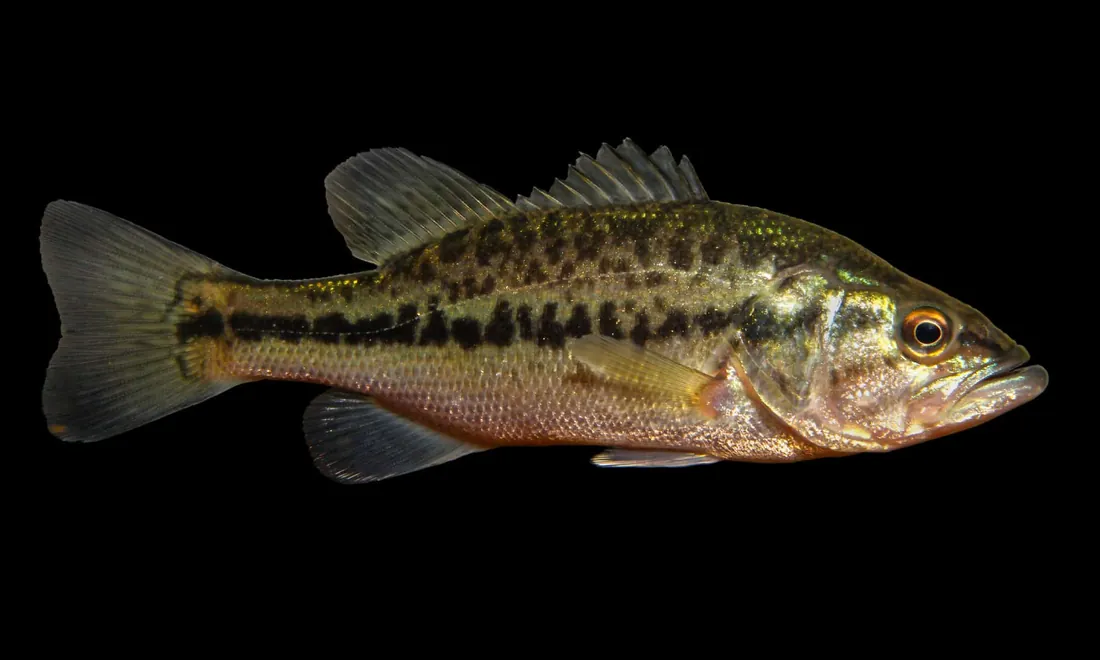 Black bass
Micropterus punctulatus
Clear reservoirs and rivers. Often deeper than largemouth and tied to current.
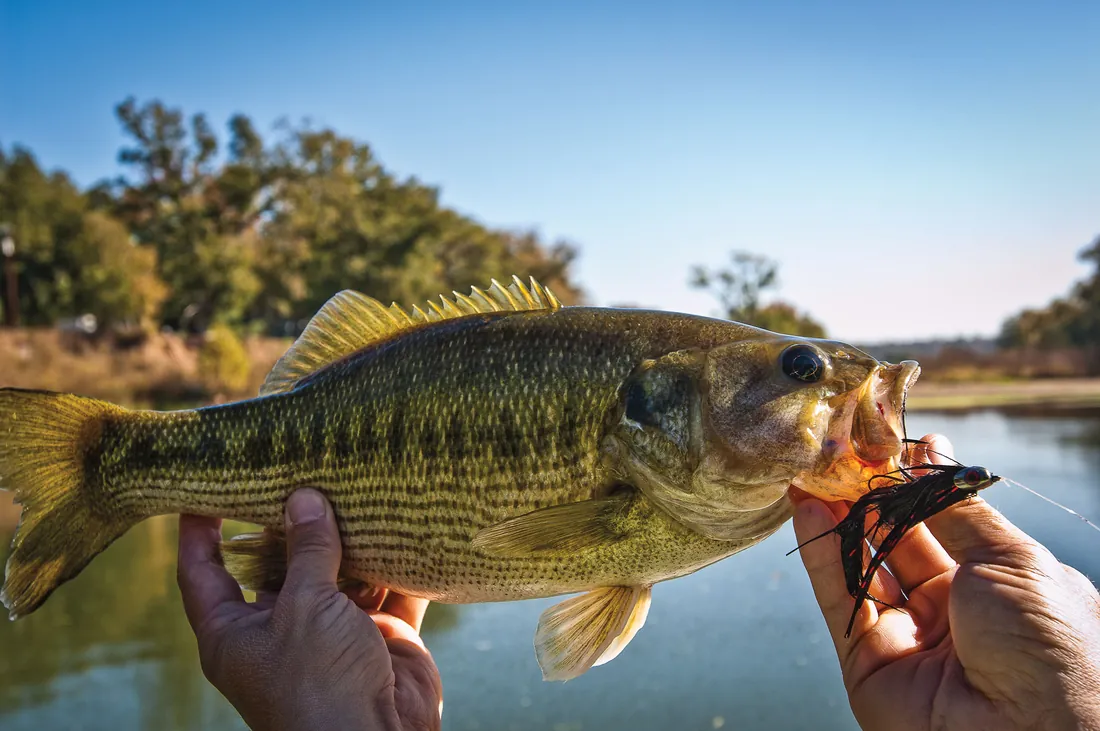 Black bass
Micropterus treculii
Endemic to central Texas rivers. Identify carefully and check the watershed rules first.
 Temperate bass
Morone saxatilis
Big rivers, reservoirs and coastal systems. Schools keep moving well after dark.
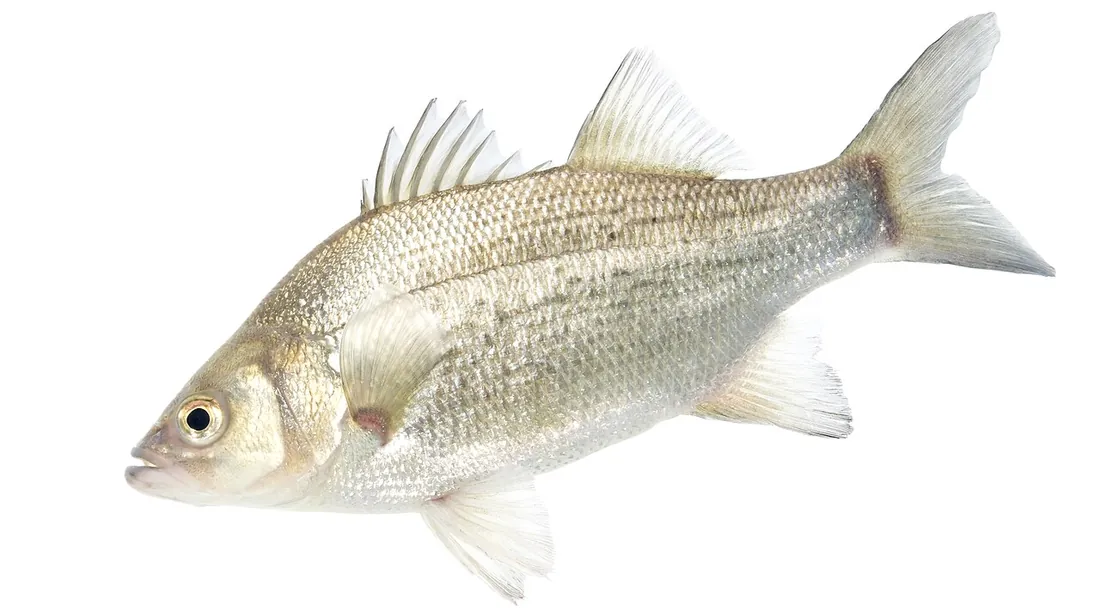 Temperate bass
Morone chrysops
Rivers, reservoirs and larger lakes. Follows forage in tight, fast-moving schools.
No species match that filter.
Mobile tools
An overview of the tool categories worth carrying, pointed at public data and official services rather than invented products.
Suggest a toolDownload permitted access points and contour references before you leave signal. A map doesn't override a posted closure or local knowledge.
Use an official forecast and live radar. Stop for thunder — a phone is information, not shelter.
Log conditions, method and handling. Leave sensitive spawning and habitat coordinates out of anything public.
Check physical traits against wildlife-agency guidance. Never let an image match decide a legal harvest.
Dim the display, waterproof the device, and carry independent light, power and a route you could walk without a screen.
Before you launch
Redundancy is the whole idea after dark: independent light, power, flotation, communication and a conservative turnaround time. Tick these off — your progress is saved on this device.
0 of 9 packed
How we work
Every edition is source-reviewed and never claims a field test that didn't happen. Where a field note is added, it names the contributor and records the place, date, water conditions and method.
Wildlife agencies, weather services, parks authorities and conservation bodies come first.
Direct observations are dated, located and never presented as universal outcomes.
Current regulations and on-water conditions override any general editorial guidance.
Material changes get an update date and a correction note on the page.
Common questions
Short answers to what new night anglers ask us most.
It can be, with preparation. Fish with a partner where possible, leave a float plan, wear your flotation, carry redundant light and communication, and walk your exit route in daylight. Stop and get off the water at the first thunder.
Beyond rod and tackle: hands-free lighting with a backup, a charged phone in a waterproof case, flotation you wear, layers for the coldest hour of the night, and a first-aid kit. Specific requirements vary by province, state and waterbody.
Largemouth and smallmouth are commonly caught at night, especially near cover and rocky transitions. Spotted bass also feed in low light. Striped and white bass can school and feed aggressively after dark when they find forage.
Moonlight changes visibility, shadow lines and how you navigate — those effects are real and worth planning around. Claims that a specific phase guarantees a better bite are far less reliable. Use the moon to plan your night, not to predict your catch.
As a reference, yes. As a decision-maker, no. Compare several physical traits against your wildlife agency's own guide, and never let a single app image decide whether a fish is legal to keep.
Get the camera ready while the fish is still supported in the water. Wet your hands, use a rubberised net, hold the fish horizontally, and keep air exposure to a few seconds. Carry out every scrap of line and litter.
Start with your provincial or state wildlife agency, then cross-reference the specific waterbody authority. Local exceptions and seasonal closures are common and they override general guidance, including ours.
Canada desk
We publish field notes with the contributor named and the conditions recorded. Corrections are just as welcome as stories.
Write to the desk